
Most businesses face steep odds right from the start. You see it in the numbers and recent flops. Yet these facts don’t doom you. They show why quick learning sets winners apart. High failure rates mean self-made errors dominate, not bad luck. Spot them early, and you gain an edge.

Shocking Stats That Prove Failure Is the Norm, Not the Exception
Failure hits hard and fast. The U.S. Bureau of Labor Statistics tracks this closely. About 76% of businesses survive year one. That drops to 52% by year five. Only 35% make it to year ten. Startups fare worse, with 90% failing overall.
These patterns hold across recent cohorts. Businesses born in 2013 saw just 34.7% reach 2023. Rates vary by year and region. For example, 2021 births hit 84.6% one-year survival in the Pacific area. Recessions like 2008 dragged it down to 71.4%.
Industries show clear differences. Restaurants and food services often fail at 60-65% within five years due to slim margins and high costs. Tech startups crash at rates near 72% over five years from competition and unproven ideas. Construction struggles most long-term.
Here’s a quick view of survival by key milestones and sectors:
| Milestone/Industry | Survival Rate | Main Reasons |
|---|---|---|
| Year 1 (All) | 76-80% | Early cash shortages Bureau of Labor Statistics |
| Year 5 (All) | 52% | No market need, poor teams |
| Year 10 (All) | 35% | Ongoing costs, competition |
| Restaurants (5-yr) | 35-40% | High overhead, low demand |
| Startups (Overall) | 10% | Cash flow (29%), no need (42%) Failory startup stats |
| Tech/AI (5-yr) | 28% | Hype vs. reality |
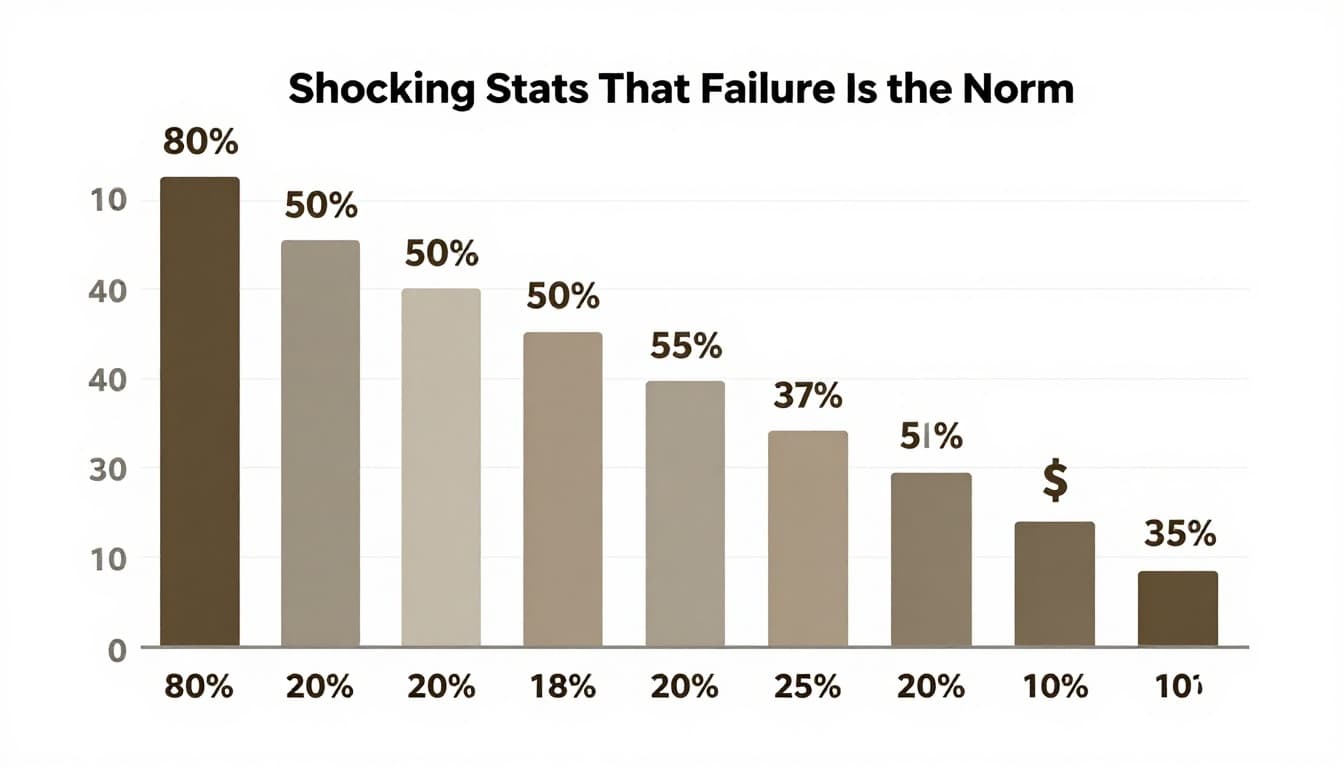
Cash woes top the list at 29% of failures. No market need causes 42%. Bad teams account for 23%. These stem from poor planning, not outside shocks. So, track cash weekly. Test ideas with customers first. Build strong teams early. High odds favor those who learn fast.
Real-World Flops from 2023-2026 and Quick Lessons Pulled from Them
Recent cases drive the stats home. Leaders ignored basics like cash and partners. Patterns repeat: overspend, skip checks, chase hype. You can avoid them.
Linda Yaccarino stepped down as X CEO in late 2025. She joined amid ad losses and user flight after Elon Musk’s buyout. Chaos from poor direction and debt piled up. Competition from Threads hurt more.
- Lesson: Vet bosses and backers closely. Misaligned leaders sink ships fast.
Sonder, a short-term rental startup, filed Chapter 11 bankruptcy in 2024. It burned over $500 million on fast growth. Guest complaints and high costs killed demand. Marriott cut ties due to quality issues in their partnership.
- Lesson: Check partners thoroughly. Bad fits drain resources and reputation.
Tesla slashed thousands of jobs in 2025. Slow EV sales and China rivals forced cuts. Morale tanked as production lagged. The auto sector saw 68% five-year failures from similar missteps.
- Lesson: Plan layoffs with care. Sudden cuts erode trust and slow recovery.
Overspending crushed firms like Byju’s in 2024. Its $22 billion valuation vanished on unchecked growth. Startups lost $150 billion total in this era. No sales matched the hype.
- Lesson: Budget tight from day one. Match spending to real revenue.
Unchecked AI hype doomed many in 2025-2026. AI startups hit 72% five-year failure from misuse risks like data leaks. Small firms ignored rules, facing shutdowns.
- Lesson: Test tech fully before scale. Hype blinds; proof wins.
These flops show fixable errors beat market forces. Poor planning and bad choices caused most. Watch cash, teams, and partners daily. Spot signs early, and you sidestep the traps.
Unlock Lessons Fast: Simple Steps Entrepreneurs Use to Bounce Back Stronger
You just saw recent flops like Sonder’s bankruptcy or Tesla’s layoffs. Those hurt. But smart entrepreneurs don’t stay down. They follow clear steps to pull lessons out fast. These moves turn pain into progress. Experts like those at Harvard Business School back them. Failed founders often build stronger next time because they process right. For example, Viblio’s founder shut down in 2016 from market missteps. He later led a $4 billion firm by fixing those gaps. You can do the same. Start here.
Process Your Feelings and Chat with Failure Vets
Feelings hit hard after a flop. Anger or sadness clouds your head. So let them out first. This clears denial and opens your mind. Experts say it works because emotions block smart choices until you face them. Acknowledge the sting. Journal it or walk it off. Then you think straight.
Next, talk to others who failed. Loneliness kills momentum. Vets share tips that save time. They kill self-doubt too. At a 2025 UConn workshop, John Toribio of a smart-clothing startup stressed this. He bounced back by chatting with peers after early hits.

Consider a startup that got investor nos. Founders felt crushed. They processed grief alone at first. Then they joined founder groups. Peers suggested a product redesign based on real feedback. Sales jumped 40% in months. No more denial meant quick pivots. As Entrepreneur outlines in coping strategies, chats build resilience fast. Reach out today. Your network holds the fixes.
Dig Deep: Analyze, Classify, and Fix the Root Cause
Analysis beats guessing. Call a team huddle right away. Everyone shares views. This uncovers blind spots. One person misses what the group sees. Honest talk finds truths fast.
Classify the failure next. Sort it into types for the right fix. Preventable ones stem from basics like poor training; train staff to stop repeats. Complexity failures come from unknowns like new markets; adapt with more checks. Intelligent ones happen in smart tests; keep experimenting because they build knowledge.
For instance, a firm expanded without local rules. They lost big on fines. Team review classified it as preventable. Extra research fixed it. Small experiments tested new spots cheap.
Use steps like those from BDC’s problem-solving guide. First, list facts. Ask why five times to hit roots. Test fixes small. Laron Burrows of Andros learned this after solo mistakes. He now uses teams and experts. Results? Sustainable growth. Therefore, classify and dig. You avoid the same traps.
Act Swift and Smart: Price Right, Stay Simple, Experiment Small
Dwelling slows you. Move forward fast after fixes. Focus on one key change. Do it well. Complexity breeds more errors.
Price for profit from day one. Undercut too much, and you bleed cash. Test prices with quick surveys. Adjust based on yeses.
Keep it simple. Say no to extras. Extra features distract. Nail the core first.
Run small experiments always. Low cost means low risk. Try a tweak on 10 customers. Measure results. Scale winners.

Yiden Zhang of SeaSol pivoted after setbacks. Small academic tests proved seaweed materials. Now they scale safe. Besides, research shows prep beats past fails alone. So act now. Price right, simplify, test tiny. You build wins that last.
Make It Stick: Habits That Turn Past Errors into Future Wins
You’ve analyzed your last flop and acted on fixes. Great start. Now lock in habits that stop repeats. These routines build prevention into your daily work. They shift you from reaction to control. 75% of VC-backed startups fail, yet founders who learn often crush it next time. Henry Ford rebuilt after two busts. Walt Disney bounced from his first studio flop to build an empire. You can too. Pick these habits and watch errors fade.
Track Every Dollar with Weekly Budget Checks
Cash kills most businesses. So check it often. Review inflows and outflows every week. Use simple sheets or apps. Spot leaks before they sink you.
Start with basics. List fixed costs first, like rent and salaries. Then track variables, such as ads or supplies. Compare actuals to plans. Adjust fast if sales dip.
For example, Ford tracked costs tightly after early cars flopped. He cut waste and priced right. That fueled mass production wins.

Set calendar alerts for reviews. Involve your team. They catch what you miss. This habit alone dodges 29% of failures from cash shortages. Stay tight, and funds flow steady.
Study Rivals with Facts, Not Hype or AI Alone
Dreams blind you to real threats. So gather facts on competitors weekly. Check their sites, prices, and reviews. Use tools for data, but verify yourself.
Pull sales numbers from public reports. Note what customers say online. Test their offers as a buyer. See gaps you fill better.
Disney studied animation rivals after his Laugh-O-Gram bust. He added sound and color first. That edge built Mickey Mouse magic.

Always human-check AI outputs. Tools spot trends fast, but they miss context. Cross-check with real calls or visits. As HBR notes on better decisions, facts beat guesses every time.
Build Review Routines and Say No to Shiny Distractions
Routines cement wins. Hold short team reviews every Friday. Cover wins, slips, and next tweaks. Keep it to 30 minutes.
Choose evergreen content over daily posts. Timeless guides pull traffic year after year. Skip hype chases that burn time.
Say no to extras. Focus on core goals. Test AI ideas small, but prove them first. Delta Air Lines stuck to core habits post-2020 woes and rebuilt strong.
Make your plan now. List three habits. Schedule first checks. Track progress monthly. These steps turn past pain into your biggest edge. Start today, and own your future.
Conclusion
You now know the pitfalls from stats and flops like Sonder or Tesla. Then you saw steps to process, analyze, and act fast. Habits like weekly cash checks and rival scans lock in those wins.
Repeat founders succeed 30-50% more because they learn from business mistakes. So grab your last setback. Review it with these tools today.
Share your story in the comments below. What habit will you start first? Your next success waits; most big wins follow fails, and yours can too. Sign up for our newsletter for more steps on smart growth.